The Parvati and the People
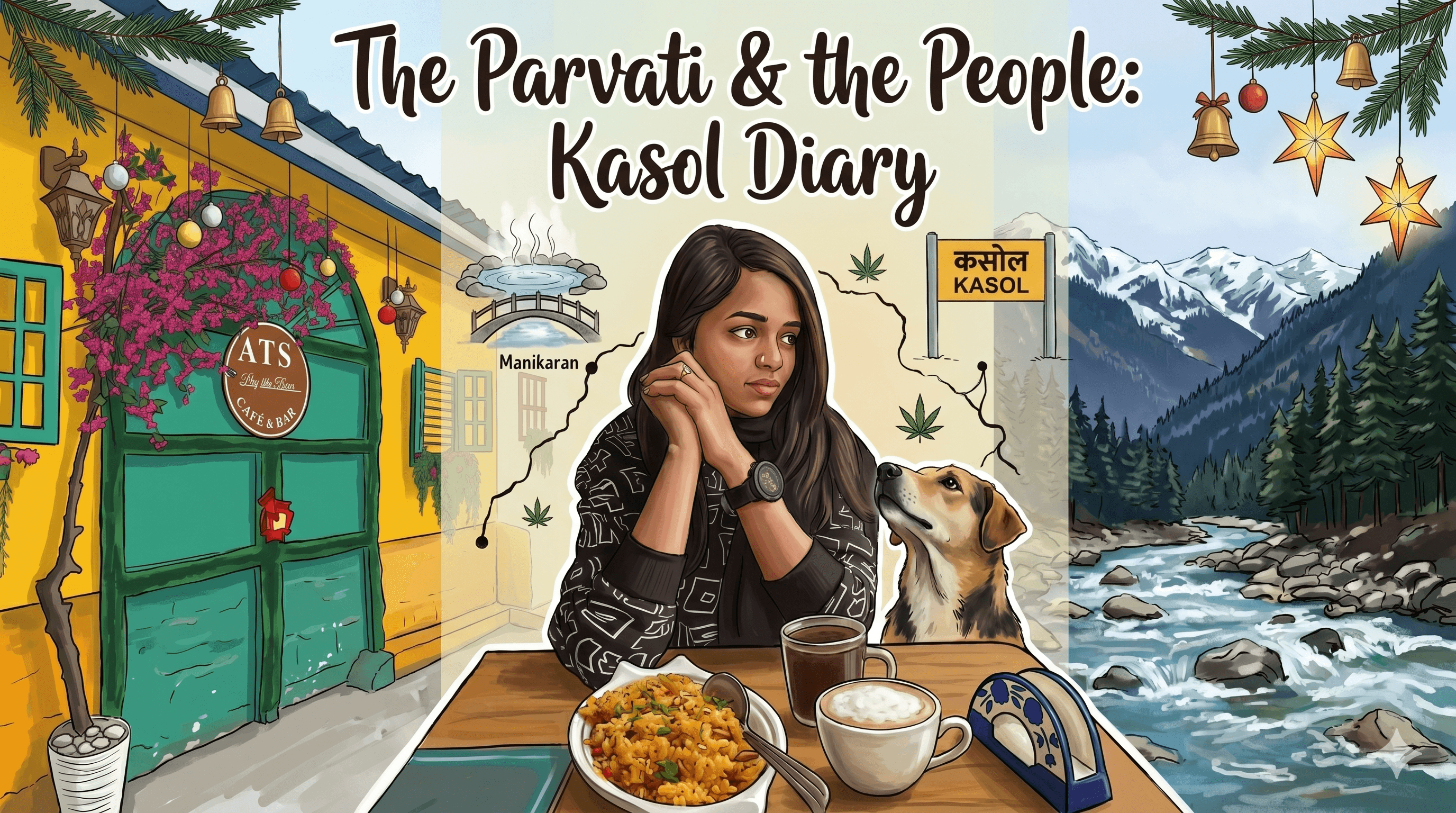
You cannot laze around in Kasol for too long. Not because there is any rule against it, the place just pulls you out. We were walking uphill to the cafés and the river bridges. About a ten minute walk from our place. Nothing here comes entirely easy.
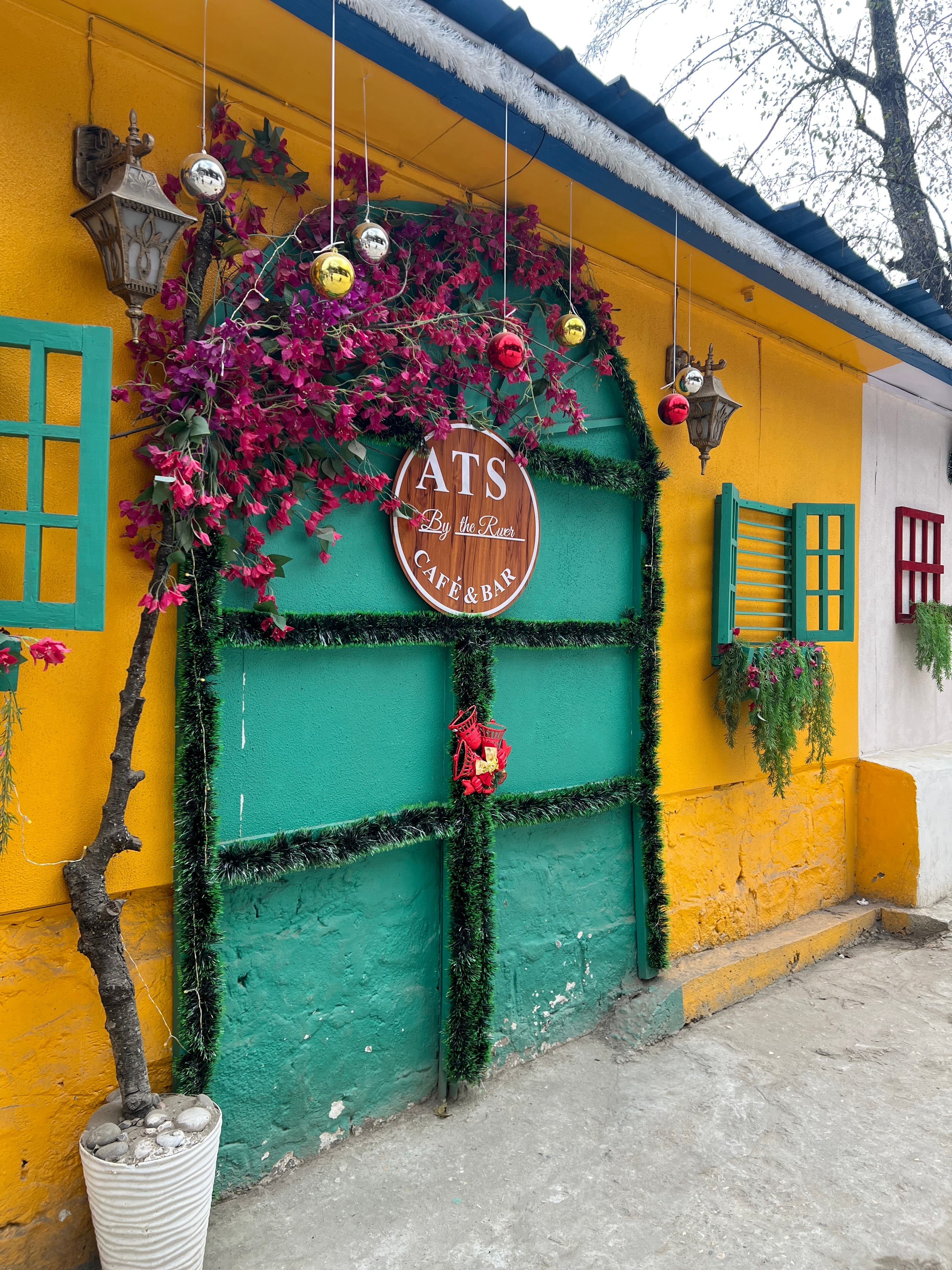
We navigated to ATS Café as the first stop of the day. It had the Instagram reputation and made its way onto every traveller's list. We were out early enough that the shops were still opening, staff sweeping their fronts and arranging chairs.
Right at the entrance of the café, a dog appeared and took it upon himself to receive us, walking ahead, glancing back, leading the way. The dogs of mountains are experts in this. They clock a traveller instantly and appoint themselves as guides, companions or honorary trip members, often without being asked.
From ATS we wandered further, looking for a place to eat, and found a café with a river view that outdid anything we had seen so far. It was nearly empty at that hour, just the sound of the Parvati moving below and the mountains holding everything in place above.
We found our spot and I remember the exact feeling of sitting down there. My mind went very quiet for a moment, and then very loud. The loud that is pure, uncomplicated happiness.
The café manager appeared, took one look at us and switched languages. Instead of responding to our careful Hindi, he addressed us in Tamil. 'I am Tamil too.'
It stopped us both completely. He said he was from Munnar. He had come all the way up from Kerala and was now managing this café and the stay place directly across from it.
Munnar to Kasol is not a small distance in any sense of the word, geographically, culturally, or in terms of sheer life decision. We met a person who looked at a café by a river in the valley and thought, yes, this is where I want to be, and then actually went and made it happen.
It was something Naviin and I had talked about more than once. Sometimes seriously, mostly as a dream. Like so many couples, we had flirted with the idea of running a small place in the hills to escape the weight of the life we had built. But there he was, already doing it.
Moved by the idea from a safe fantasy to something real, I had a slightly terrifying question. Could we actually do it?
I asked him a dozen follow-up questions, searching for the logic that made his leap possible, trying to see if I had the same nerve to leave everything behind. He answered, long past the point where most people would have gone back to work.
Eventually we placed our orders and sat by the riverside. I could have stayed there for years. The place held me without effort. We left only when the café began filling up. We hired a two-wheeler for our next quest.
Four or five kilometers deeper into the valley, the road opens into Manikaran. A Gurudwara and a Shiva temple side by side, each drawing its own believers.
The Parvati Valley lies along a seismically active zone, and the natural springs that rise from the earth here are hot enough to cook the Gurudwara's langar, the community kitchen that feeds every visitor regardless of faith. Earth's style of hospitality, apparently.
Standing on the bridge, the hot spring smoke drifting past our faces, I found that both explanations felt equally true. The geological and the spiritual. A place where science and mythology coexist without conflict.
Naviin had been to Kasol enough times to be considered a local here. He did a History Channel rundown at the bridge. I was secretly pleased that his map of the world was so much fuller than mine. I kept that to myself and let the sarcasm do the talking instead.
On the ride back through Kasol, I began to really see what Naviin was describing. Hebrew script on café boards, written casually alongside Hindi and English as though it had always been there. Menus offered shakshuka and hummus next to Maggi and chai. The music drifting into the street felt distinctly Mediterranean.
Naviin explained that the mini Israel identity began in the 1980s. Young Israelis, fresh out of mandatory military service, started finding their way here, drawn by the mountains and a cost of living that asked very little of them. Even before India and Israel had official diplomatic relations, they came in groups. Kasol changed around them.
The valley offered something else too. An escape the world had quietly found its way to. Cannabis plants grew openly in the hills, without anyone making a fuss about it. They came. They stayed. Kasol became what it is.
Standing in the market later, looking at the Hebrew script in name boards, it struck me that this was the soul of the valley. It takes whatever arrives and makes room for it.
I thought about that on the walk back. The falafel on the menu. The Tamil voice in the café that morning. The smoke from a spring that had been rising from the earth since before any of us arrived. Everyone had come looking for something. I was no different.
1 / 4
Stay with the journey
New chapters and stories, delivered to your inbox when they are ready. No noise — only words worth reading.